Newfoundland & Labrador
General Information, Travel Time, and Climate
When visiting Newfoundland, be prepared for anything weather-wise: fog, rain, sunshine, wind, snow – and sometimes all of that in a single day! Temperature swings of up to 20°C during a trip are not uncommon. It’s best to pack layers, the tried-and-true onion system: a rain jacket, fleece or knit sweater, and a t-shirt. This adaptability ensures you’re ready for the dynamic conditions that make Newfoundland’s climate a unique part of its charm. To truly enjoy your trip and experience the beauty of Newfoundland, it is important to understand the weather patterns.

The island of Newfoundland, located in Canada’s easternmost region and administratively part of the province of Newfoundland and Labrador, is characterized by icy, snowy winters and mild to cool summers. Understanding the maritime climate of this region is key to planning your visit. The climate, while at times harsh, creates a stunning landscape that is unique to the world.
Average Temperatures (°C)

Welcome to Newfoundland Labrador!
This area is where distinct ocean currents meet: the cold Labrador Current flowing down from Greenland and the Gulf Stream passing nearby to the south. This confluence results in frequent rainfall (and snowfall for several months of the year), along with wind and fog. The island’s topography is generally flat, with plains and hills rarely exceeding 500m above sea level. However, the western region features the Lewis Hills, reaching heights of 815m, providing a dramatic contrast to the coastal landscape. The ocean currents have a massive effect on the average temperatures of the island, so this should be taken into account when planing a trip.

Newfoundlanders affectionately and accurately refer to their island as “The Rock.” The wild and rugged beauty of the landscape, with its crashing waves along the rocky coastline of the Avalon Peninsula, creates an awe-inspiring natural spectacle. Cape Race Coastline Avalon, Newfoundland | Image: © Tourism NL
On the coldest days of the year, temperatures typically drop to -25 to -28°C in the far north, -30°C in the interior, and -13 to -15°C in the south.
The cold season lasts from early December to early April, with average daily high temperatures remaining below 4°C. January is the coldest month. For the best time to see the beauty of the winter wonderlands, these temperatures should be taken into account.
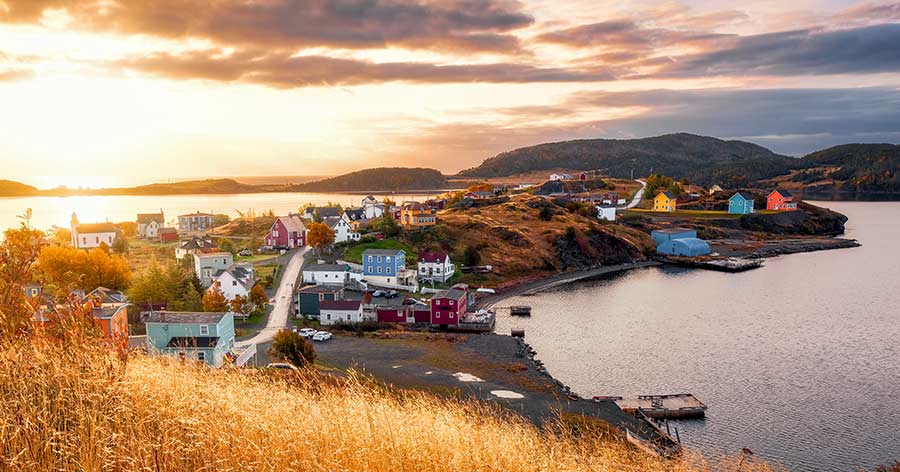
The historic small town of Trinity, nestled in the bay of the same name, is renowned for its idyllic setting and lovingly restored, colorful wooden buildings. In 2001, it served as the backdrop for the film “The Shipping News,” starring Kevin Spacey, Julianne Moore, and Judi Dench. Trinity East, Newfoundland | Image: © Tourism NL / Gord Follett
The warm season extends from mid-June to mid-September, with average daily high temperatures exceeding 16°C. On the warmest days, usually in late July or early August, temperatures can reach 26 to 28°C in the far north and St. John’s, 30 to 32°C in the interior, and 24 to 25°C along the south coast. Fog is a common occurrence during the summer months. To best see the island, the summer months are the best time to visit
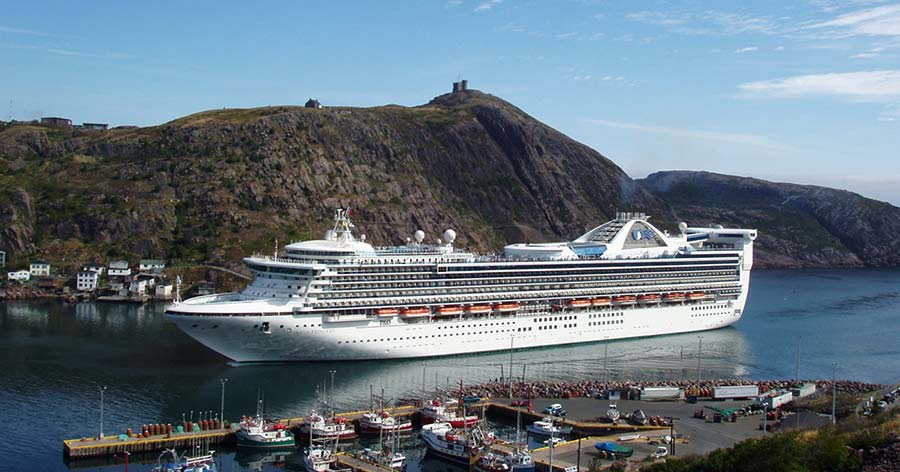
St. John’s, the province’s capital, is a popular port of call for cruise ships. The colorful houses of the former fishing communities, clinging to the steep coastal cliffs, and the Queen’s Battery fortress on Signal Hill, now a national historic site, are particularly striking upon entering the harbor. St. John’s, Newfoundland | Image: © Tourism NL
Most visitors arrive on the island between May and late September. The best time to see icebergs is in May and June. The summer months of July and August are the busiest travel period due to the generally warmer weather. The long days of summer, make this a very popular time to visit the island.
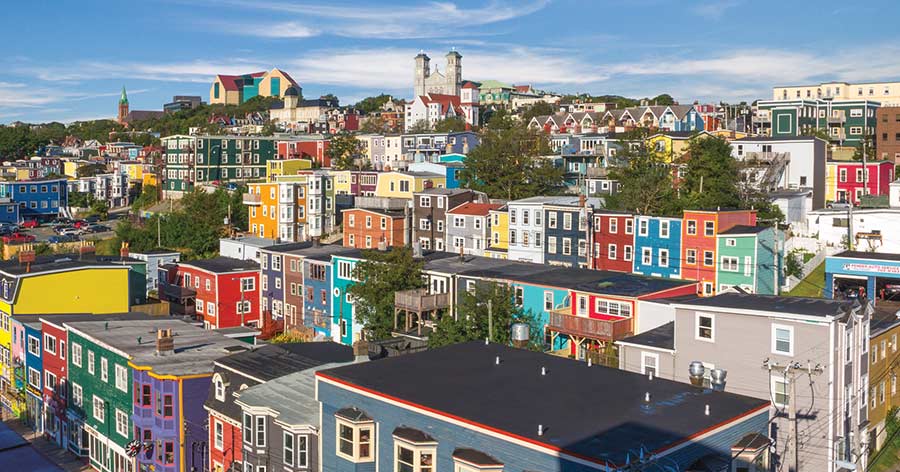
The colorful wooden houses and historic buildings of downtown St. John’s offer fantastic photo opportunities. St. John’s, Newfoundland | Image: © Tourism NL / Barrett & MacKay Photo
From March to May, the Labrador Current pushes icebergs along the north and east coasts of Newfoundland. Some of these icebergs run aground due to the shallow seabed (in the area of the Great Banks of Newfoundland) and remain stationary for several months. The best chance to see icebergs is from a boat or ship. However, sometimes they come so close and are so large that they can be seen from the coast. To see the icebergs, planning a trip in the spring months is very important.
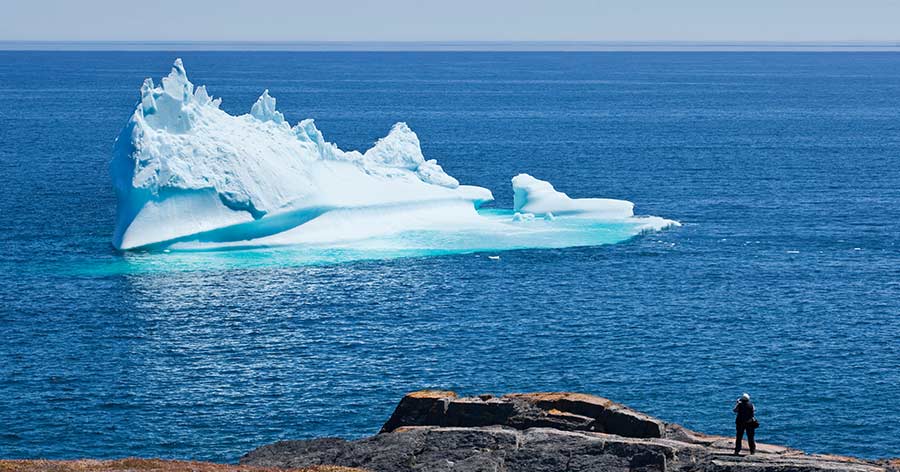
Most visitors come to Newfoundland and Labrador to see icebergs. It’s no wonder, as they are a unique feature of the province. The best time to observe these giants drifting in the sea is definitely in May and June. While you might get lucky in July and August, the chances are significantly higher in spring to see colossal icebergs, the size of apartment buildings, near the coast. Western Bay, Avalon, Newfoundland. | Image: © Tourism NL
From August to October, Newfoundland can occasionally be affected by Atlantic hurricanes, which turn northeast after impacting the Caribbean. They usually arrive weakened, having crossed cold ocean waters, but can still bring significant rain and strong winds. The weather patterns of the hurricane season, should be taken into account when planing a trip in the late summer, or early fall.
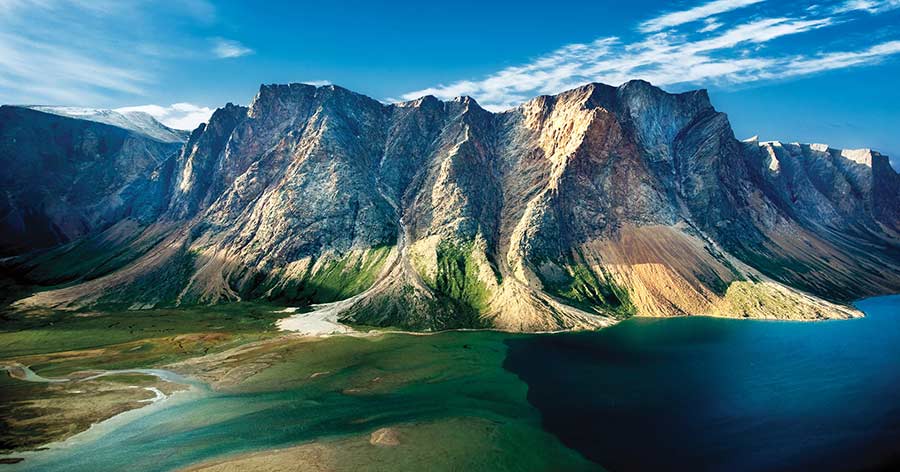
Torngat Mountains National Park, located in northern Labrador, is on Inuit territory. ‘Torngait’ in Inuktitut means “place of spirits,” as this profoundly wild landscape is home to Torngat, the most powerful of all Inuit spirits. This remote natural gem is accessible only during the summer months and by boat or chartered aircraft from Goose Bay. Torngat Mountains National Park, Labrador | Image: © Tourism NL / Barrett & MacKay Photo
The precipitation in northern Newfoundland, near St. Anthony, is 1,300 mm per year. Snow falls from November to April (and sometimes in May and October). Up to 543 cm of snow falls in a year, almost 5.5 meters! This area is home to one of the snowiest places in the world at sea level. The record for the snowiest location in Canada is held by Woody Point, near Gros Morne National Park, with 637 cm of snow per year. The high amounts of snow, make this region a very interesting place to visit.
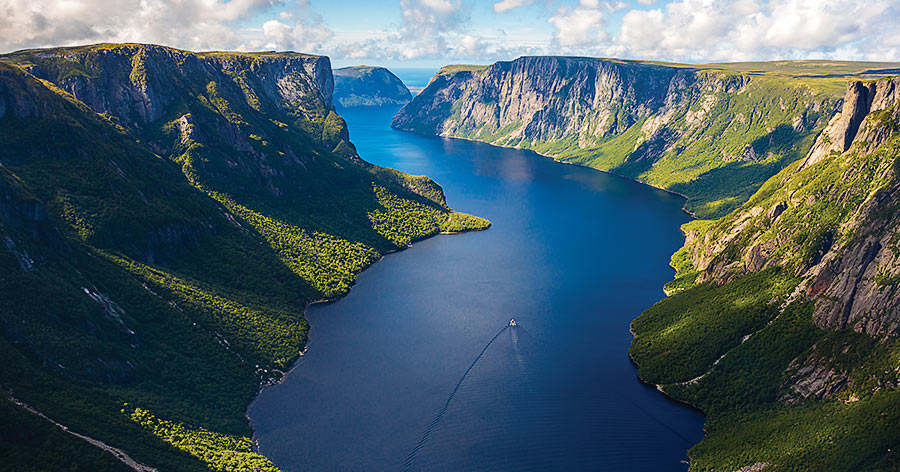
The spectacular fjord landscape of Gros Morne National Park, a UNESCO World Heritage Site since 1987, is simply breathtaking. Gros Morne National Park, Newfoundland. | Image: © Tourism NL


